.png?w=1000&h=743)

Hello!
This is KLD, a store specializing in pre-owned designer clothing.
Today, for those who say, "There are various materials for clothing, but honestly, I don't really understand the differences..." I would like to talk about the common materials used in clothing and their respective characteristics.
This is how I will be presenting the information.
- Natural materials
- Chemical fibers
- What is a blended fabric?
If you're someone who wants to know the characteristics of the material of your favorite clothes that you always wear, or if you're looking to buy clothes but aren't sure what kind of materials would suit you, please take a look!
Natural materials
cotton
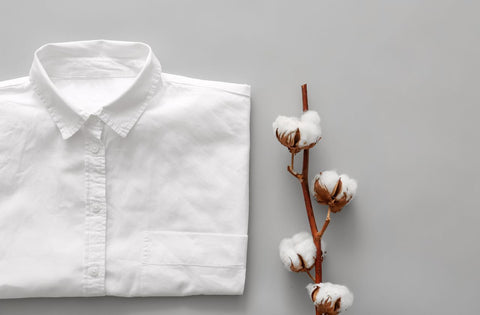
Generally, the most commonly used fabric for various purposes, from innerwear to outerwear, is indeed cotton material.
Cotton is a material also known as "cotton flower," derived from the fibers of a perennial plant belonging to the Malvaceae family and the Gossypium genus, which are spun into threads and woven into fabric.
The 100% cotton fabric has a soft, fluffy feel, is gentle on the skin, and offers excellent breathability and absorbency.
For example, fabrics like "cotton broad" and "sheeting," which are used for shirts, are one of the basic fabrics. They are made using a plain weave technique and have a smooth texture without a brushed feel. Depending on the thickness of the yarn used, they are mainly lightweight and are often used for shirts that can be worn year-round, as well as for spring and summer clothing.
"Is cotton only available in thin materials?" This is certainly not the case, as brushed flannel, thickly woven canvas, and denim fabrics are often made from cotton as well.
Also, Oxford cloth shirts are popular as a slightly thicker, more casual option.
Making yarn and then using it to make cotton knitwear is also a classic method, isn't it?
Thus, cotton can be described as a material that can be adapted to various thicknesses and seasons depending on the weaving method and yarn thickness.
Examples of products made from cotton fabric
wool
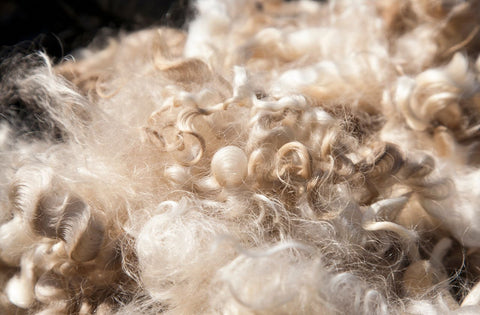
Wool is a natural material that can be considered the star of winter clothing.
Wool is made by spinning the wool, which is shorn from sheep, into yarn and then weaving it.
Knitted items made with thick yarn are a winter staple, aren't they?
Wool is often thought to refer only to sheep's wool, but in fact, it also includes fibers from other animals such as alpacas, angora (rabbits), and cashmere (goats).
There are cases where "毛" is written in Japanese on the inner tags of clothing, but this notation is also used for the hair of animals like those mentioned above, in addition to wool.
As a material that is very useful in winter, its greatest feature is undoubtedly its heat retention.
Since it's made from animal fur that protected animals from the cold, it provides exceptional warmth when worn on a cold day.
Additionally, it has excellent moisture absorption and moisture release properties. Innerwear made from materials such as merino wool (wool obtained from sheep of the "Merino breed") tends to remain odor-free and clean even after being worn for several days! This seems to have garnered many enthusiastic fans among outdoor users. (It is said that the perception of effectiveness may vary from person to person.)
Merino wool products are available here.
Due to its high functionality, lightweight woven wool fabrics such as summer wool and tropical wool have also been developed for summer wear.
This material is lightweight and cool, with moisture-wicking properties while being thinly woven, making it ideal for smart slacks and jackets. It is a fabric commonly seen in men's brands.
Linen/Ramie/Hemp
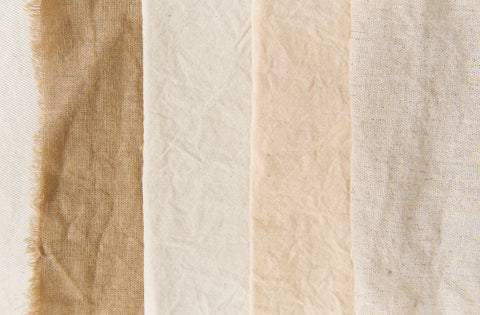
When it comes to comfortable materials that you definitely want to incorporate into your spring and summer wardrobe, we're talking about fabrics made from linen, ramie, and hemp.
Perhaps the most distinctive feature of linen is its crisp texture and elasticity.
The crisp fabric that doesn't cling to the skin feels great in the summer, and its excellent breathability is a major plus.
Furthermore, the fabric itself has excellent water absorption and wicking properties, so you can stay comfortable even during the sweaty season.
There are differences in texture and feel among various types of linen (flax), ramie (ramie), and hemp (cannabis), even though they are all made from the same麻 material. However, they all share a crisp and unique texture that becomes softer with each wash.
I mentioned that it is recommended for summer, but materials like linen have the characteristic of containing air within the fibers, so they can be expected to provide warmth in winter, making them a comfortable material to use year-round.
There are also knit materials made from hemp, and the characteristic of low-gauge knits (which are knitted loosely with thick yarn) is that they tend to feel heavier.
The substantial feel of the material is one of the appealing aspects of linen.
Products made with linen material can be found here.
silk
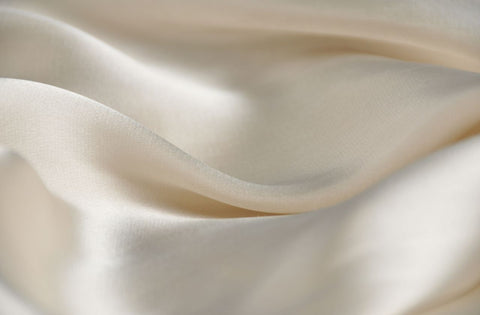
Among natural materials, silk is arguably the one that evokes a sense of luxury.
Silk made from the cocoons produced by silkworms is created by softening the cocoons in hot water, twisting the extremely fine fibers to spin the thread, and then weaving it into fabric.
Considering the effort involved and the cost of raising silkworms, it's understandable why it's considered a luxury material.
Furthermore, its high quality is another reason why it is considered a luxury item.
The delicate luster and beauty are, of course, remarkable, and because it is made of protein, it is close to human skin, has moisture-retaining properties, and is gentle on the skin. Additionally, it excels in moisture absorption and release, providing comfort, and it can absorb ultraviolet rays to offer protection. These functional qualities are indeed very high, which explains why it has been cherished since ancient times.
Due to the delicate nature of the material, there are also disadvantages, such as susceptibility to discoloration from sunlight, tendency to stain when exposed to water, ease of shrinking when washed, weakness to friction, and vulnerability to insect damage. These characteristics reflect the delicacy inherent in natural, fine materials, making them challenging to handle.
Therefore, it seems that many people purchase silk clothing as stylish attire for special occasions and prefer to have it cleaned at a dry cleaner.
In addition to the generally imagined glossy and smooth fabrics, there are also fabrics made from silk that have a deliberately rough texture with neps (clumps of fibers) left intact, which may make one wonder at first glance if there are pilling, such as non-glossy silk fabrics.
However, this fabric also has a unique charm, maintaining the softness of silk against the skin, while being easier to wear than glossy fabrics. It is featured in natural-style brands and brands like COMOLI that create high-quality everyday wear.
Products made from nep silk material are available here.
Additionally, silk is also used to make knitwear, and many of these items seem to be made with a fine, high-gauge weave.
Thanks to the quality of the materials, this knit fabric has a subtle sheen and an elegant look.
Japanese paper
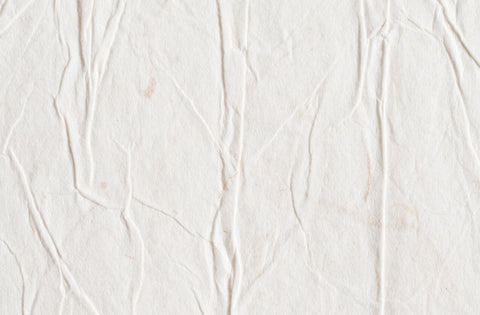
Among natural materials, one that has become somewhat unusual and is frequently seen in recent years is "washi" (Japanese paper).
Washi (Japanese paper) and Western paper actually use different materials, such as plants, and washi is said to be much more durable than Western paper.
Therefore, when used as fabric, washi paper is attracting attention as a highly durable and environmentally friendly material.
The method involves making washi paper by pulping plant fibers like regular washi, cutting it into thin strips, twisting those strips into threads, and then weaving them into fabric.
One of the characteristics of fabric made from washi paper is undoubtedly its dry touch and pleasantly smooth feel.
The fabric, which is difficult to become fuzzy and has a crisp texture, can be comfortably worn in hot seasons and is characterized by its resistance to sticking to the skin.
Moreover, it has excellent water absorption properties, a high ability to release it, and is also highly quick-drying, making it an ideal material for summer clothing.
Moreover, the excellent absorption of oils is a characteristic not commonly found in other fibers, and it can be considered one of the reasons for the pleasant feel of fabrics made from washi.
When knitted, it's called "paper yarn," and the unique dry, pleasant feel of washi paper remains.
It's a very popular knit item for spring and summer.
Products made from washi paper are available here.
Chemical fibers
polyester
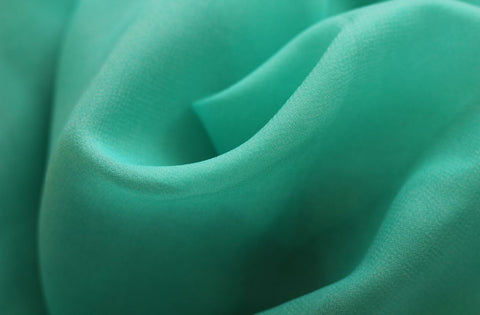
Polyester is the most widely produced synthetic fiber fabric in the world.
They're inexpensive, durable, and easy to wash, so they have the image of being a great ally for everyday wear, right?
It is a synthetic fiber made primarily from petroleum.
The fabric is lightweight, resistant to wrinkles, and quick-drying, making it commonly used for sportswear and outdoor clothing.
However, there are many that do not absorb sweat and have poor breathability due to the weaving method, so there are also many opinions that they are not recommended during the hot summer months.
However, polyester blouses are easy to wash, and as long as you pay attention to the fabric of the inner layer, there is no discomfort that makes them unwearable.
The texture varies widely, ranging from fabrics with a silky sheen to those with a firm thickness, as well as sheer and opaque options... it can be said that this material can take on quite a variety of forms.
Polyester is easy to process, making it ideal for skirts with fine pleats.
It is said that polyester knit is somewhat more prone to pilling compared to natural materials, so regular care and being mindful to avoid friction as much as possible while wearing it can help prolong its lifespan.
Products made with polyester are available here.
nylon
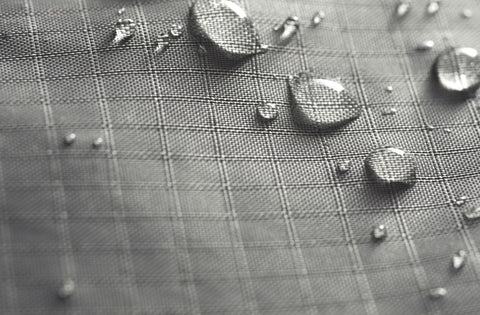
Alongside polyester, nylon is another popular material among synthetic fiber fabrics.
Many people may associate the material used for sacoche bags, backpacks, and durable eco-bags.
Nylon was the world's first synthetic fiber, and its origins date back to 1936.
Surprisingly, it's a material with a long history.
It's a tough-looking material that can be used in various ways, such as making stockings by creating a mesh pattern or using its elasticity to make swimwear.
Like polyester, it is wrinkle-resistant and highly resistant to friction, making it a very easy-to-handle material.
Products made with nylon are available here.
Polyurethane

Many people might confuse it with polyester because the names are similar.
Polyurethane, also known as spandex or elastane, is a material referred to as "polyurethane elastic fiber."
Polyurethane elastic fibers are a type of synthetic fiber made from plastic, developed as a substitute for rubber.
As a substitute for rubber, it is used in products that take advantage of its elasticity. In general clothing, it is often blended with other materials rather than being used as a 100% polyurethane fabric, to provide stretchability to the fabric.
For example, if you look at the inner tags of stretch denim, there is almost always a mention of "polyurethane (or spandex, elastane)."
Products made with stretch material are available here.
One drawback is that it's not very durable, making it difficult to maintain its original condition for a long time.
However, if you take care of it according to the washing instructions on the inner tag, you should be able to wear it just like other fabric clothes without any issues.
acrylic
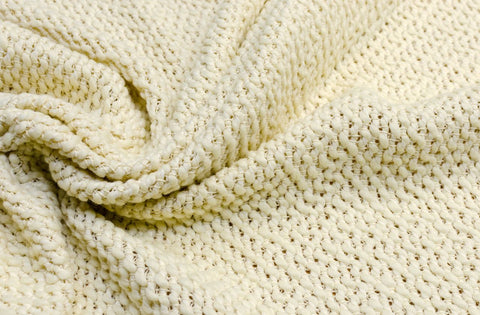
Acrylic is said to be the material that has the closest feel to wool among all synthetic fibers.
It's a material that's often processed into yarn and then used to make knitwear, right?
Many of you may have seen acrylic yarn displayed alongside wool yarn in craft stores and similar places.
It is characterized by its plump, soft, and elastic texture.
Another attractive feature is that it is less susceptible to moth damage compared to natural wool.
Because it is somewhat prone to pilling, care should be taken to avoid friction.
Another drawback is that, when comparing the warmth it provides when worn, it simply doesn't compare to wool.
Since there are many knits available at a lower price than wool, it is recommended to consider acrylic materials when you want to easily incorporate knits into your autumn and winter fashion.
Items made with acrylic material can be found here.
Rayon
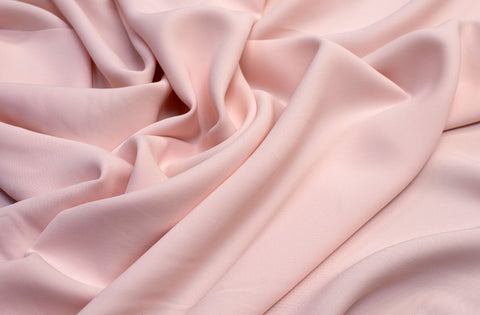
Rayon is a material that can create fabrics with a unique softness and supple texture.
This material is often used for fabrics such as those used in Aloha shirts.
Rayon, unlike petroleum-based materials such as polyester, is actually a type of "regenerated fiber" that is originally processed from natural materials.
The plant material extracted from wood pulp is processed with chemicals, making it a material that can be naturally returned to the environment if properly treated.
It is said that this material was originally developed as a substitute for silk, and because it was created in pursuit of delicate beauty, there were challenges regarding durability in the early stages of development. However, it has now been improved to the extent that it can be worn daily without any issues.
Compared to polyester and other materials, it is somewhat prone to wrinkling, which is a drawback; however, on the other hand, you can enjoy beautiful drapes and a glossy appearance.
It is highly valued for its compatibility with dyeing and its beautiful color development, allowing for the vibrant patterns of aloha shirts to be well expressed.
Items made with rayon can be found here.
What is a blended fabric?
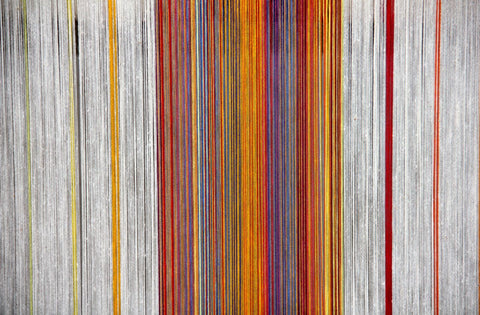
Finally, I'd like to talk a little about "fabric blending."
Blending is the process of mixing two or more types of fibers to spin yarn.
For example, even with the materials introduced this time, there are many blended materials that can be created by mixing them in various combinations, allowing us to leverage the strengths of each material and compensate for their weaknesses.
You may sometimes see labels on clothing that state "60% cotton, 40% polyester."
In most cases, this means that the fabric is made by blending different materials.
For example, by blending wool and acrylic, products can be made that are cheaper than 100% wool knits, and fabrics blended with cotton and nylon in a 60%/40% ratio are called "60/40 cross," which are used in traditional outdoor wear.
The technique of "blending," which allows for the creation of fabrics that leverage the advantages of various materials, has become an essential technology in modern garment making.
To those who have read this far
Thank you for reading this far!Choosing materials appropriate for the season will make you more comfortable.
thank you very much!
KLD Buyback Service
KLD also buys unwanted clothing, shoes, bags, jewelry, and other items.Find out the price without registering as a member! We also offer LINE appraisals, so please feel free to contact us!