.png?w=1000&h=743)

Hello!
This is KLD, a store specializing in pre-owned designer clothing.
Today is
What's the difference between "gathers," "tucks," "pleats," and "darts," which are often used in clothing product names?
I'd like to talk about that!
This is how I will be presenting the information.
- What are gathers?
- What is a tuck?
- What are pleats?
- What is darts?
Regarding the differences between these techniques,"I kind of understand it, but I can't explain the difference..."I think many people feel that way, don't they?
Please be sure to read this article!
What are gathers?
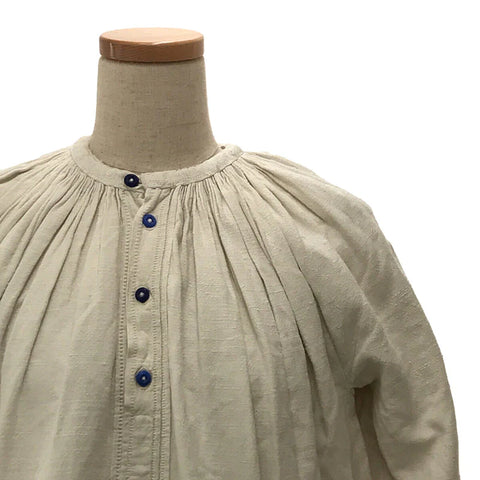
Gathering is a technique used in clothing and textile design.
By sewing a running stitch onto the fabric and then gathering it tightly, the fabric is brought together to create a three-dimensional shape.
By creating gathers, you can add volume and create soft drapes.
It is a technique often used in feminine items such as fluffy flare skirts and puff sleeves.
Gathers are used for a variety of other purposes as well.
By adding gathers to the waist area of skirts and dresses, you can create a more fitted waistline or design a flared silhouette.
Additionally, you can add gathers to areas such as the sleeves, collar, and hem to create decorative details.
When creating gathers, pull the thread of the sewn part to gather the fabric, and then sew further in that state to secure the gathers.
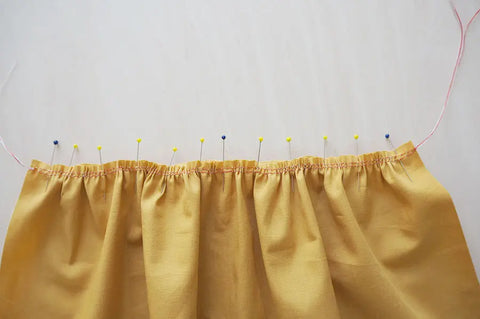
You can also use elastic or string to create gathers.
Skirts with elastic waistbands often have gathers created using this method.
The decorations such as frills are mainly made using this gathering technique. (There are also those that use the tacking method mentioned later.)
Items using gathers are available here.
What is a tuck?
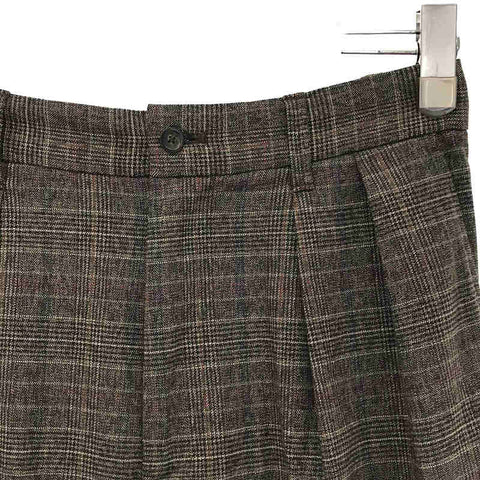
Tuck is,This technique involves folding and sewing the fabric to create volume and design accents.
The technique of intentionally gathering and sewing the fabric has some similarities to gathering, but unlike gathering, which creates random pleats by tightening the seams, tucks involve firmly folding the fabric, resulting in a neat and tidy impression.
Additionally, it is a technique that can create more regular pleats than gathers, and is often used to shape the fabric along the body to create a silhouette.
For example, it is used in the following examples, making it a widely applicable technique.
- By adding tucks to the waist of skirts and dresses, you can create volume, similar to a flare.
- Adjusting size and silhouette using tucks. By applying tucks, especially to the waist and hip areas of men's bottoms, a fitted silhouette can be created, or the size can be reduced.
- Fine tucks called "pintucks" are used as decoration on the front of shirts and other parts of the garment.
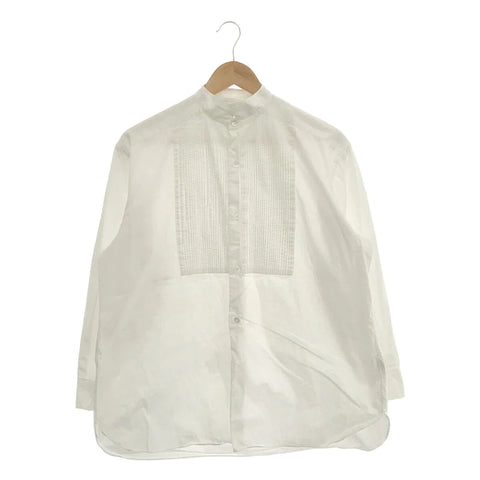 Dress shirt with pintucks:Product page
Products using tucks are available here.
What are pleats?
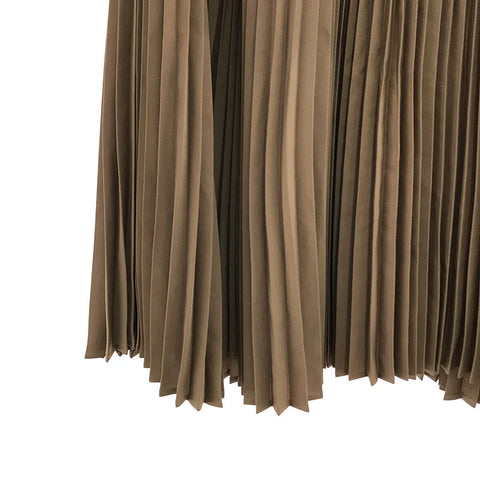
A technique similar to tucks is "pleats."
While there are similarities in the technique of creating fine pleats, tucks are It has the characteristic of "pinching and holding a part," which is different from pleats that create evenly continuous folds in the fabric.
Tucks are a technique where part of the fabric is folded and sewn, and pleats are typically folded uniformly from the top to the bottom of the fabric (and made continuous).
Tucks are defined as techniques that do not create strong creases except in the folded areas, while pleats are techniques that create strong creases throughout the folded sections, resulting in clear lines.
Therefore, the waist pleats of the men's pants introduced in the earlier section "Tuck," as well as the decorations on pintuck shirts, may be referred to as "pleats" by some manufacturers, making the definition somewhat difficult.
There are various types of pleats depending on how they are folded, such as "one-way pleats" that are uniformly folded in the same direction, "accordion pleats" that are zigzag folded like an accordion, and "box pleats" that are folded into a box shape, among others. The folding method also changes the overall feel.
In recent years, particularly popular are skirts with fine pleats, many of which are "accordion pleats," made from fabrics like polyester with creases.Heat and pressure are applied to fix the folds in the fabric.
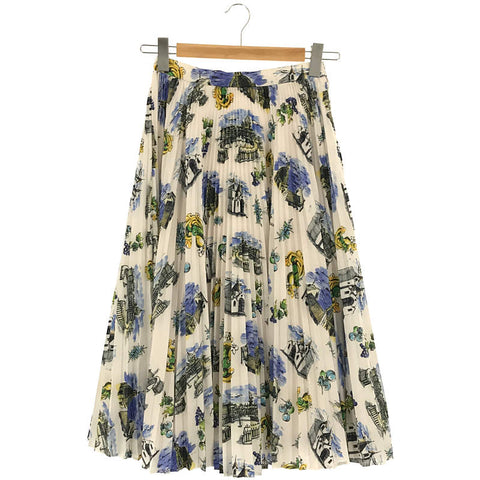
Pleats are currently often made by processing the fabric with heat, but there is also a technique to express pleats by carefully folding the fabric and stitching it in place with thread.
What is darts?
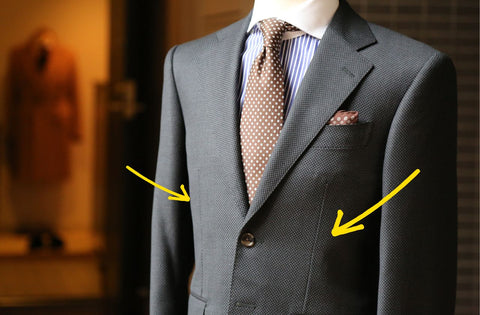
Darts is A technique used to adjust the shape of clothing by folding the fabric and sewing it with pinch stitches.
Darts are primarily used to adjust the fit and silhouette of clothing, and this technique is commonly seen in areas such as sleeves, body circumference, waist, and hips.
Similar to the previously mentioned tucks, darts are primarily used to make the silhouette of clothing fit the body better.It's safe to say that it's rarely used as a decorative element.
In contrast to tucks, which primarily involve folding and sewing one side of the fabric, darts are sewn to close all the folded pleats.
If you make the folds straight, you will get unintended protrusions (corners) in the fabric. Dimple (indentation)As it can create issues, the key point is to gradually narrow the seam allowance towards the edge to blend with the overall silhouette.
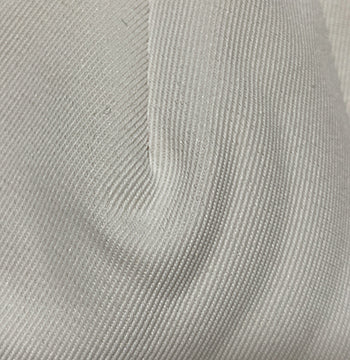
Darts with "dimples" (Quote:yousai.net
Darts are a technique often applied to the side parts of shirts or suit jackets designed to fit the body.
To those who have read this far
Thank you for reading this far!
Gathering, tucks, pleats, darts... Many of you may have a general idea of what they are, but might find it difficult to explain them clearly.
I think it will be helpful to know these terms when searching for your favorite clothes, so please try using them when you search!
thank you very much!
KLD Buyback Service
KLD also buys unwanted clothing, shoes, bags, jewelry, and other items.Find out the price without registering as a member! We also offer LINE appraisals, so please feel free to contact us!